Azuki TCG rules
Azuki TCG is a two-player trading card game. Each player brings a Leader, a Gate and a 50-card deck, and the first to bring the opposing Leader’s health to 0 wins. Here is every rule, with diagrams from the real board.
Winning
How do you win Azuki TCG?
Bring the opposing Leader to 0 health. A player who must draw from an empty deck also loses. There are no draws.

What happens if both Leaders reach 0 at once?
The player whose action brought both Leaders to 0 loses. If you play a card that deals the final damage to both Leaders, you lose; if your opponent’s Response causes the double knockout, they lose.
Step by step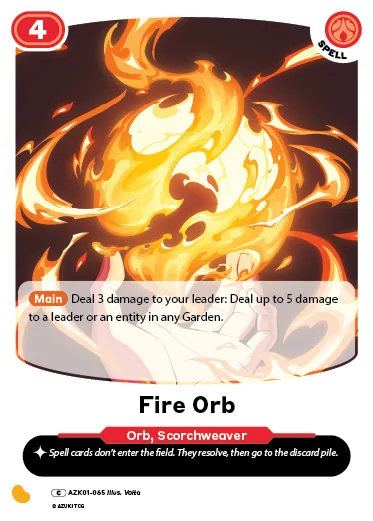
The field
What is on the field?
Each player has a row of two zones, the Garden in front and the Alley behind, plus a Leader, a Gate, IKZ, a deck and a discard pile.

- Leader
- Starts in your Garden face up and never leaves. It can always be attacked and targeted, tapped or not.
- Garden
- The front row. Only Garden cards attack, and they attack only the opposing Garden. Holds 5 entities plus your Leader.
- Alley
- The back row. Attacks and abilities cannot reach it unless a card says so. Holds 5 entities.
- Gate
- Tap it once a turn to move an entity from your Alley to your Garden. It has no health and cannot be attacked or destroyed.
- IKZ
- Your resource. IKZ you can spend sits in the IKZ area; the rest waits in the IKZ pile.
- Deck and discard
- You draw from your deck. Destroyed, sacrificed and replaced cards, used spells and spent weapons go to the discard pile.
What happens when a row is full?
If a sixth entity enters a full Garden or Alley, you choose one already there to put in your discard pile. Replacing is not destroying or sacrificing, so it works even on a card with Godmode. If your opponent forces you to replace, you still choose which card goes.
Step by step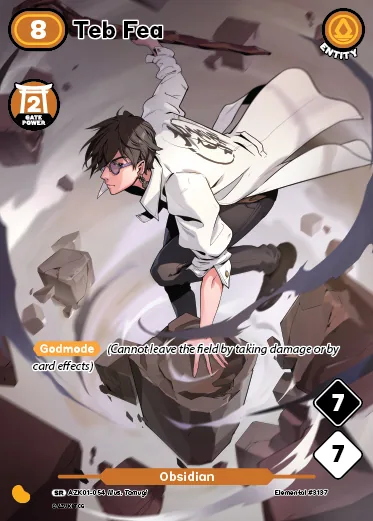
Cards
What are the card types?
A deck is built around one Leader and one Gate. The 50-card main deck mixes entities, spells and weapons. IKZ cards and one IKZ token pay for everything.
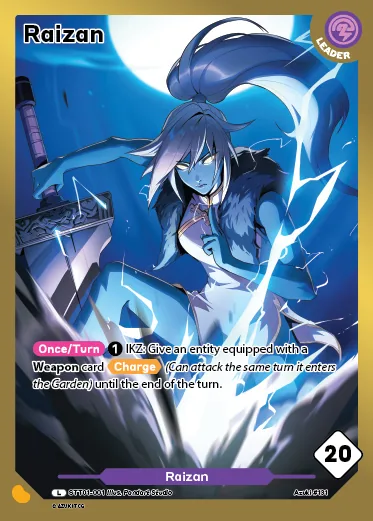 Leader1 per deck
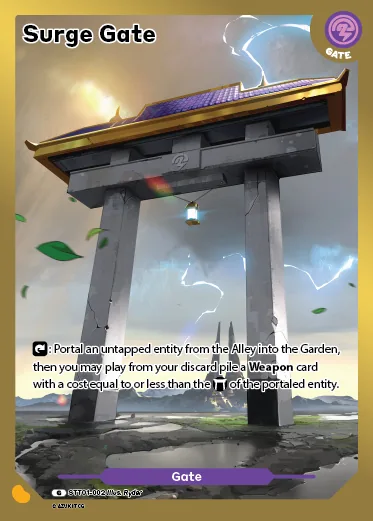 Gate1 per deck
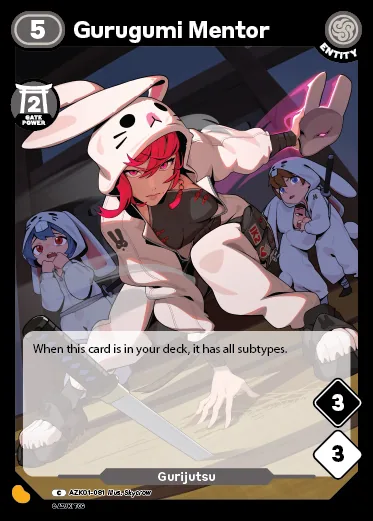 EntityMain deck
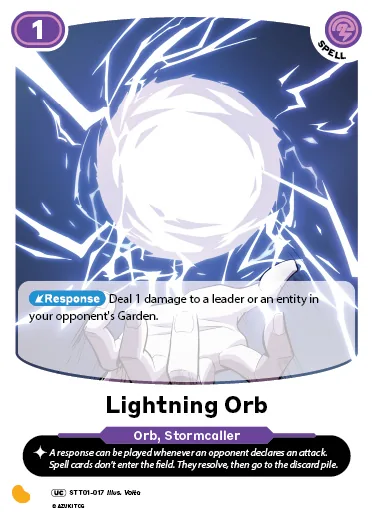 SpellMain deck
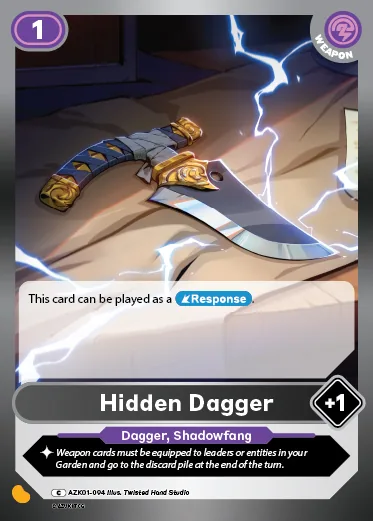 WeaponMain deck
 IKZ10 per deck
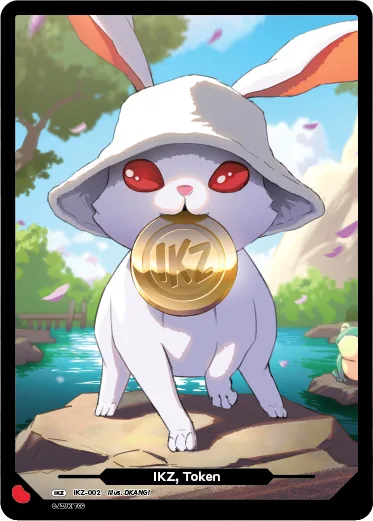 IKZ token1 per deck
- Leader
- Sets your deck’s element and starts with the health printed on it. A Leader has no attack of its own: it attacks only once a weapon or effect gives it attack, and it never has cooldown.
- Gate
- Matches your Leader’s element. Its effect grows with the Gate Power of the entity you move through it.
- Entity
- Played to your Garden or Alley in your main phase. Entities are what attack, defend and hold the board.
- Spell
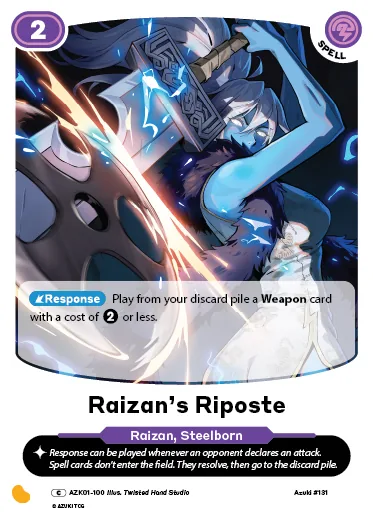
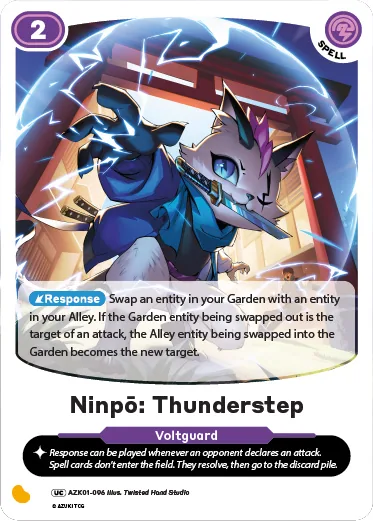
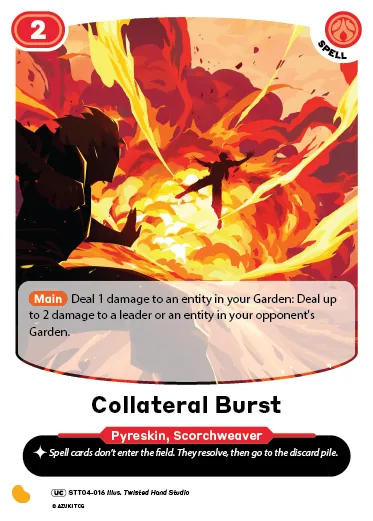
- [Main] spells are played in your main phase. [Response] spells are played when your opponent attacks.
- Weapon
- Attaches to your Leader or a Garden entity and is discarded at the end of the turn.
- IKZ
- You gain one each turn, up to 10, and tap them to pay costs.
- IKZ token
- The player going second gets it: one extra IKZ to spend once, whenever they choose.
How do you read a card?
Every entity shows its cost, Gate Power, attack and health. On the board, attack is the dark diamond and health the light one.
- IKZ cost
- Tap this many IKZ to play the card. You pay the full cost at once.
- Gate Power
- How strongly your Gate’s effect fires when this entity is moved through it.
- Attack
- The damage it deals in combat. An entity with 0 attack can still attack.
- Health
- At 0 it is destroyed. Healing never goes above the printed maximum unless a card says otherwise.
Starting a game
How does a game start?
- Shuffle your deck. In competitive play, your opponent cuts it.
- Roll a die or flip a coin to decide who goes first.
- Draw 7 cards. You start with 0 IKZ.
- Once per game, you may mulligan: put your whole hand on the bottom of your deck, draw 7 new cards, then shuffle.
What is different about the first turn?
The player going first skips the start of their first turn: no untap, no start-of-turn effects and no draw. They begin by gaining 1 IKZ.
The player going second takes a full first turn and also gets the IKZ token, a single extra IKZ they can spend that turn or save for any later one. Either player can attack on turn one with an entity that has Charge, or a Leader given attack by a weapon or effect.
Turns
What happens on each turn?
Your turn starts the same way every time: untap, draw, gain 1 IKZ. Then you play.


- Untap all your tapped cards.
- Resolve your “start of turn” effects, then your opponent’s.
- Draw 1 card.
- Gain 1 IKZ, up to 10.
- Play cards, attack and use your Gate in any order.
- End your turn: end-of-turn effects resolve, entity damage heals, weapons go to the discard pile.
Is there a hand size limit?
No. You can hold any number of cards.
Can I save IKZ for later?
Untapped IKZ stays available, including on your opponent’s turn to pay for Responses. There is no floating IKZ: you pay a card’s whole cost in one go, and every IKZ untaps at the start of your turn.
Step by step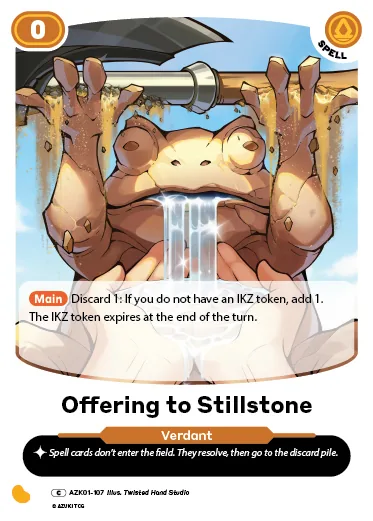
Entities and the Gate
How do you play an entity?
Pay its IKZ cost and put it in your Garden or your Alley. An entity that enters the Garden has cooldown: it cannot attack or tap for abilities that turn. Charge lets it attack anyway, but not tap for abilities. Entities in the Alley wait safely out of reach.
A card is on the field as soon as it is played, so its own effects can affect it.
Step by step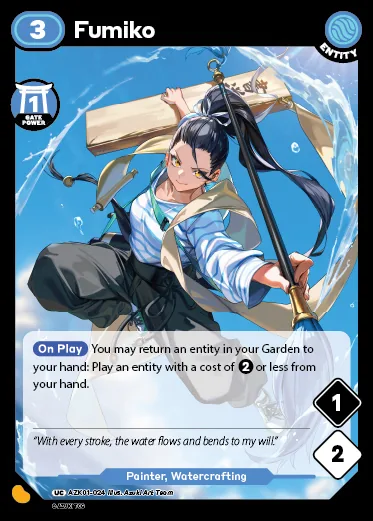
How does the Gate work?
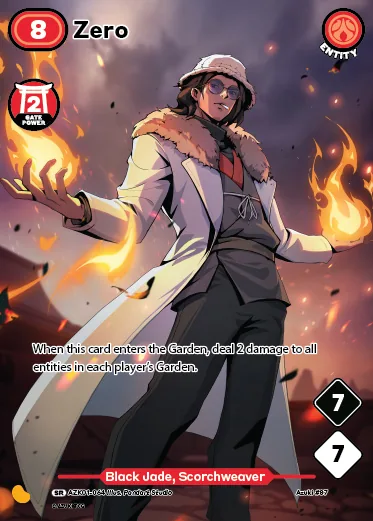
Once per turn, tap your Gate to move one untapped entity from your Alley into your Garden. This is called portaling. Your Gate’s effect then fires, scaled by that entity’s Gate Power.


- A portaled entity has cooldown, even if it waited in the Alley for several turns.
- You can portal an entity the same turn you played it to the Alley.
- If both rows are full and two entities swap places, nothing is replaced.
Attacking
What can you attack?
Attack with an untapped Garden card that has no cooldown. It can attack the opposing Leader, always, or a tapped entity in the opposing Garden. Untapped entities and the Alley cannot be attacked.

How is combat damage dealt?
Both cards deal damage at the same time. Entity damage heals at the end of each turn; Leader damage stays.


- An entity destroyed in combat still deals its damage.
- A Leader with no attack deals no damage back.
- A Leader that attacks an entity with a weapon takes damage back, and that damage stays.
- The end-of-turn heal does not count as healing for card effects.
What order does an attack resolve in?
- Declare the attacker and its target.
- The attacker’s [When Attacking] effects resolve.
- The defending player may play Responses and use [Response] abilities. If the attacker leaves the field now, the attack fizzles.
- The defending player may tap a Defender to take the attack.
- The target’s [When Attacked] effects resolve.
- Both cards deal their damage at the same time.
- If the attacker survived, its [After Attacking] effects resolve.
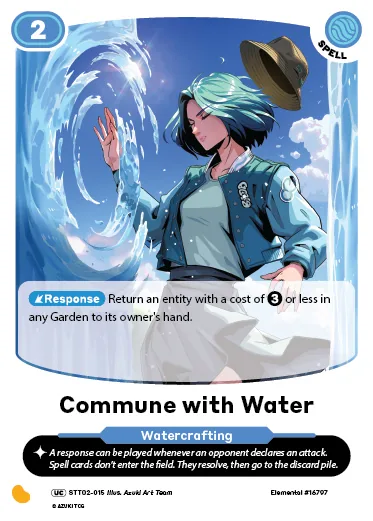
Responses and Defender
How do Responses work?
When your opponent declares an attack, you may play [Response] spells and use [Response] abilities, as many as you can pay for. Only the defending player gets this window; the attacker cannot respond. Responses are only for attacks, never for spells.
How does Defender work?
After Responses, you may tap a Defender in your Garden to redirect the attack to it. Cooldown does not stop a Defender, but an attacker with Infiltrate cannot be redirected.

Weapons
How do weapons work?
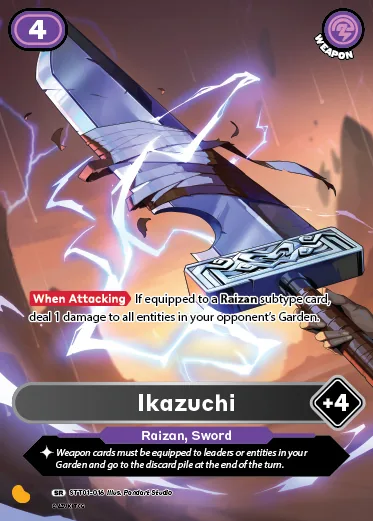
Attach a weapon to your Leader or an entity in your Garden to add its attack. Weapons are how a Leader attacks. Every weapon goes to the discard pile at the end of the turn.

- Weapons cannot go on cards in the Alley.
- One card can carry several weapons.
- If the card leaves the field, its weapons go to the discard pile.
- A weapon’s [On Play] effect fires once, when it enters the field. Moving it to another card does not fire it again.
Keywords
What do the keywords mean?
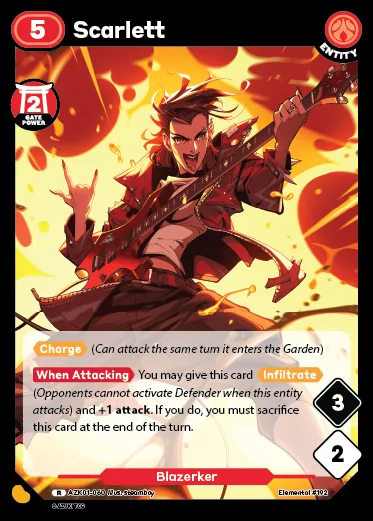
- Charge
- Can attack on the turn it enters the Garden.
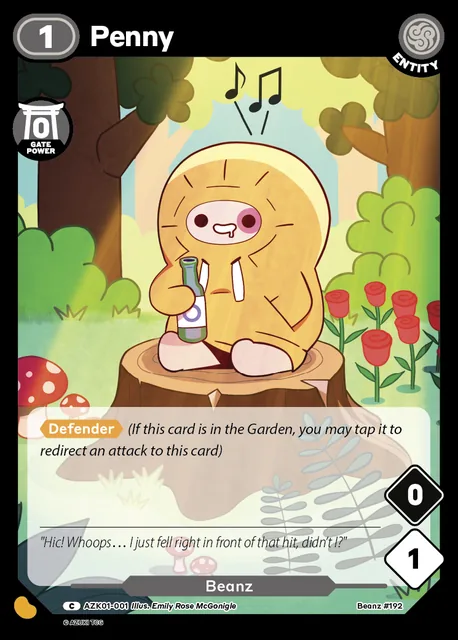
- Defender
- You may tap it in your Garden to redirect an attack to it. Cooldown does not stop this.
- Infiltrate
- Defenders cannot redirect this attack.
- Carapace
- Reduces each source of incoming damage by the stated amount. Carapace stacks.
- Godmode
- Damage and effects cannot remove this card from the field. Replacing it in a full row still can.
- Taunt
- While tapped, it must be attacked instead of other eligible targets.
- Bloodlust
- Gains +1 attack until end of turn the first time it targets a leader for an attack each turn.
- Displace
- Moves an entity from the Garden to its owner’s Alley without activating its card effects.
- Shocked
- Skips its next untap.
- Frozen
- Cannot attack or take damage; its abilities are disabled.
- Rooted
- Cannot attack for the stated duration.
- Sealed
- Tapped IKZ that cannot be untapped until after your next Reset phase.
Reading card text
How do you read card text?
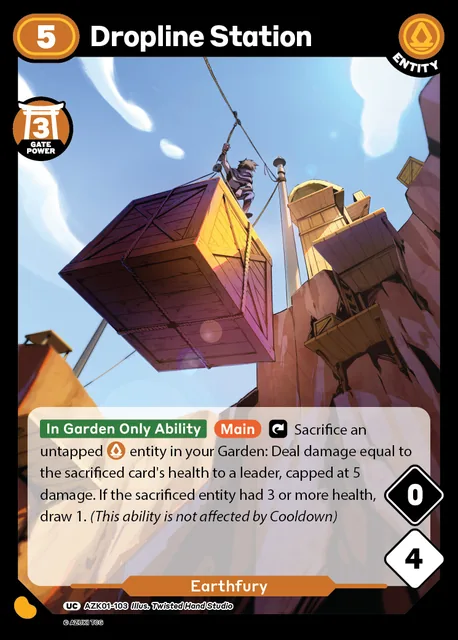
- Text before a colon is a cost. You may choose not to pay it, but if you pay it, the effect after the colon must resolve. If the cost cannot be paid in full, the effect does not happen.
- “You may” is optional. Anything without “may” is required.
- “Up to” lets you choose 0.
- [Once/Turn] effects work once a turn. A card that leaves and re-enters the field can use it again.
- Zone abilities such as “In Garden only” work only from that zone.
- Timing words set when an effect can happen: [On Play] when the card is played, [After Attacking] only if the card survives its attack.
- You can target a card that is immune to an effect; the effect just does nothing to it.
- When a card leaves the field, its stats and effects reset. At the end of each turn, temporary stat changes end.
Resolution order
In what order do effects resolve?
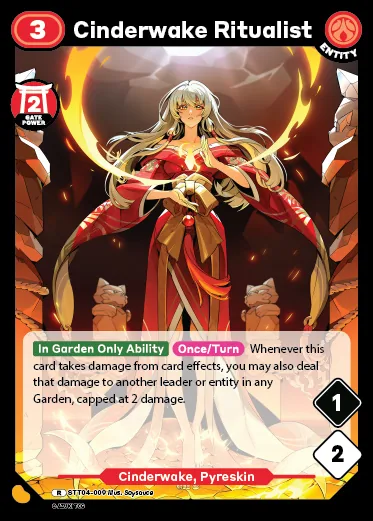
One card at a time, in the order they were played or triggered. If a resolving card triggers other cards, those join a queue and wait until the current card has finished completely.
- “Whenever” effects join the queue as soon as their condition is met, even if their card is then destroyed.
- If an effect hits several cards, cards without triggers are affected first; triggered cards then resolve from the queue.
- When cards of both players trigger at the same time, the active player orders theirs first, then the opponent.
- With several end-of-turn effects, the owner picks their order; the active player decides between both players’.
Destroy, sacrifice, replace
What do destroy, sacrifice and replace mean?
- Destroyed
- An entity whose health reaches 0, from combat or effects, or a card an effect says to destroy.
- Sacrificed
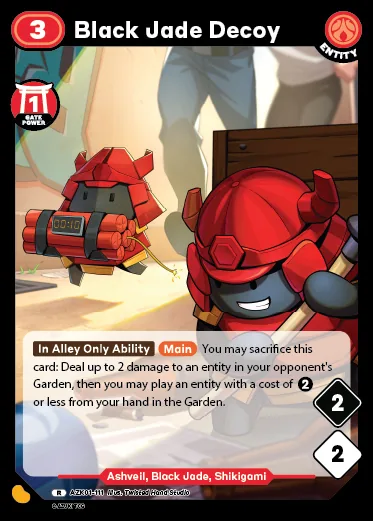
- Put in the discard pile by its owner as a cost or effect. Not the same as destroyed.
- Replaced
- Discarded to make room when a sixth entity enters a full row. Not destroyed or sacrificed.
- Bottom deck
- Put on the bottom of its owner’s deck.
- Return to hand
- Put back in its owner’s hand.
Deck building
How do you build a legal deck?
- 1 Leader, 1 Gate, 50 main deck cards, 10 IKZ and 1 IKZ token.
- Every card, including the Gate, must match your Leader’s element or be Neutral. A Leader with two elements uses a Gate of either one.
- At most 4 copies of each card ID. Alternate art counts as the same card; different IDs with the same name are different cards.
- The elements are Fire, Water, Earth, Lightning and Neutral.
Rushfire Gate is banned. Card text and current errata override these general rules.
More help
Where can I find specific rulings?
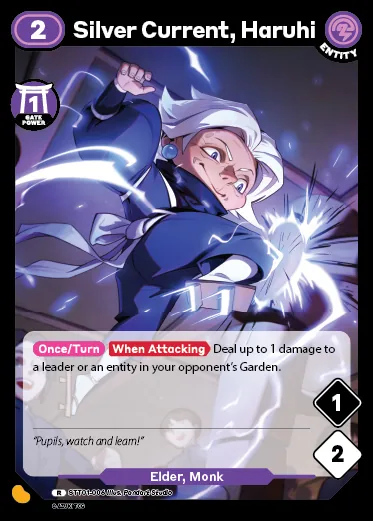
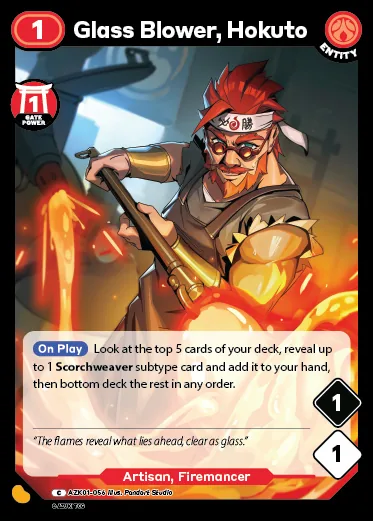
Worked examples of tricky interactions, each with the cards involved:
- Who wins if both leaders reach 0 health at the same time?
- Can an entity attack on the turn it comes through the Gate?
- What happens when an entity enters a full Garden or Alley?
- What happens if the attacker leaves the field during responses?
- What happens if a When Attacking effect destroys the attack’s target?
- Do triggered effects interrupt the card that caused them?
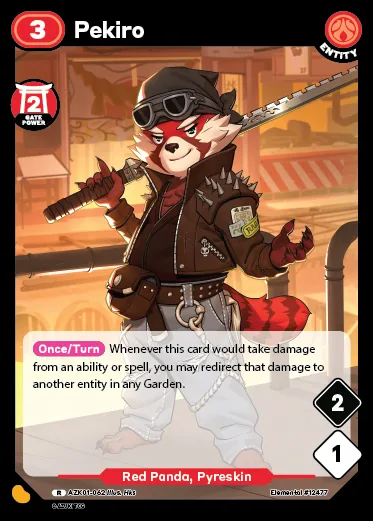
- How does Pekiro redirect damage when both players have one?
- Can you sacrifice a Godmode card to pay a cost?
- When do weapons go to the discard pile?
- Is a card already on the field when its own effect resolves?
- Can you split a cost across two plays or save IKZ for later?
Coming from another game?
How do I make my deck stronger?
Find dead cards, stop running out of cards, fix your IKZ curve and test changes: deck-building guides.
Is it like the mechanic I know?
Keywords and rules next to their closest match in Hearthstone, Magic, Runeterra, Pokémon, Yu-Gi-Oh!, One Piece, Lorcana and Marvel Snap: every comparison.
This guide follows the official game rules (PDF). When a card’s text or its errata says otherwise, the card wins. More answers in rules questions.